
When the Capital Became Unsafe, Students Came Home
Picture a mother in Port-au-Prince at five in the morning. She has packed one bag. On top, folded neatly, is her son’s school uniform. His school has been closed for months, but she can’t bring herself to leave it behind. Outside, the gunfire that kept the family awake all night has finally gone quiet. This is the moment to go.
This is what many families are describing to the United Nations and aid workers right now, week after week.
For generations, the road to a good education in Haiti ran one way: toward the capital. Families in the hills saved for years to send a son or daughter to school in Port-au-Prince. Today, that road runs backward.
A city where school stopped
The United Nations reported in September 2026 that up to 90 percent of Port-au-Prince is under gang control. Schools there have closed, been taken over, or been destroyed. Some classrooms are now where displaced families sleep.
During the 2024–2025 school year, UNICEF counted more than 1,600 schools affected by insecurity. More than 240,000 students lost their place to learn, and about 7,500 teachers lost their classrooms. Behind each of those numbers is a student who woke up one morning with nowhere to go.
Nearly 1.5 million people in Haiti have now fled their homes, according to the International Organization for Migration. Many are going back to the places their parents and grandparents once left: the rural hills of Southern Haiti. This reverse migration is changing schools across the region.
The long walk home
Imagine you are 11 years old, arriving at a small country school in the middle of the year. You left your friends, your neighborhood, maybe a relative you won’t see again. You have no report card, because the school that kept it no longer exists. Loud noises still make you jump. And the boy at the next desk has never seen a city.
Now imagine you are the teacher. Your classroom was already full and your supplies already short. You look at this new student and you know two things: he belongs here, and he will need more than you have.
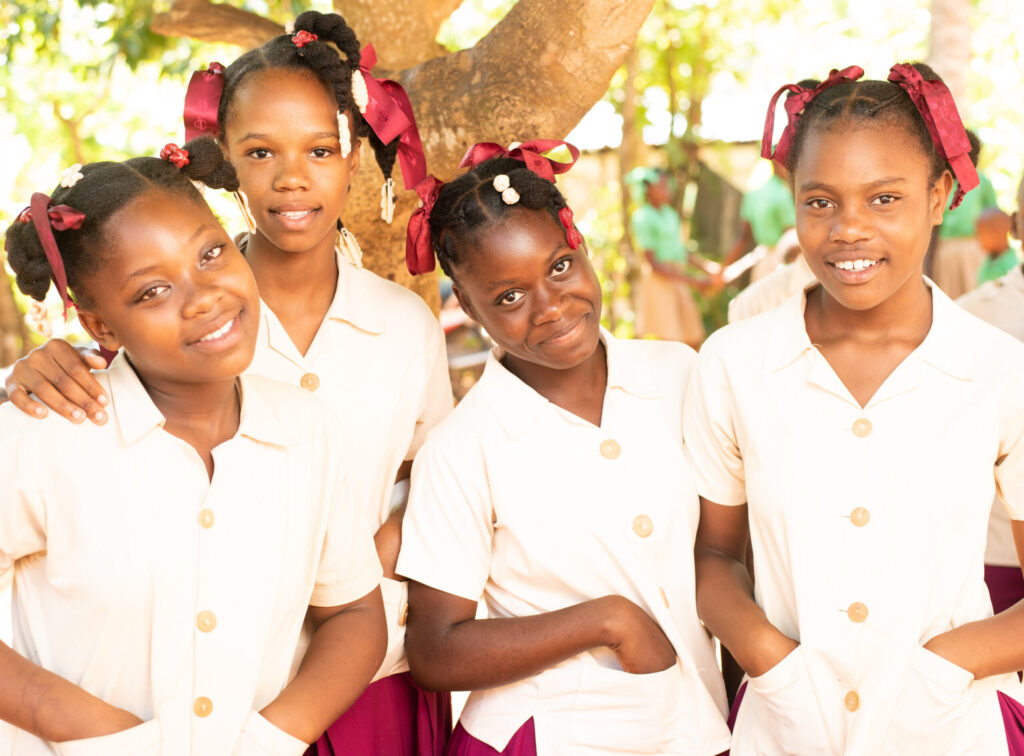
This is what rural schools in Southern Haiti, such as HavServe International Academy, are facing. Many sit far from any paved road. They welcome every student who arrives, and every new student needs a desk, books, a teacher with time for them, and often a meal.
One school’s story
HavServe began working in a rural hillside community in Southern Haiti after the 2010 earthquake. In 2018 we opened an early childhood program. It has grown into HavServe International Academy and Learning Center, which now teaches students from early childhood through 9th grade.
There is no road to the school. Community youth and parents built it by hand, one brick at a time, without heavy equipment. Materials came up the hill by motorcycle and mule. Mothers and fathers carried blocks on their heads so the next generation could learn.
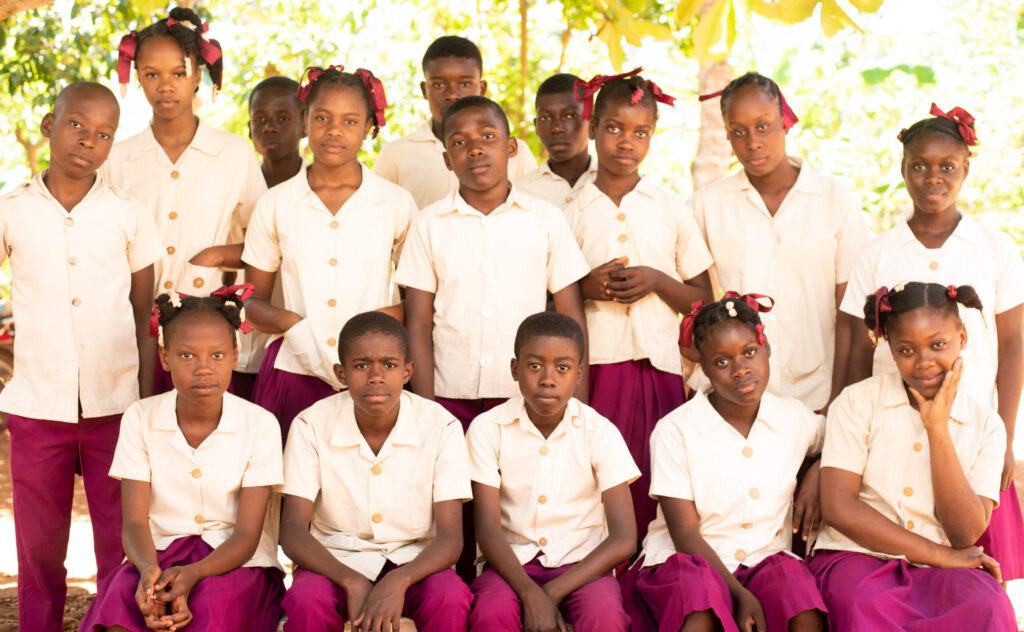
This year, students coming home from the city are finding a place in our classrooms. For a parent who has lost almost everything, seeing a son or daughter back in a school uniform means something simple and enormous: life is starting again.
In June 2027, our first 9th-grade class will finish school. We want every student who has found their way to us, including the newest arrivals, to stay and keep learning.
Join us in keeping Haiti’s classrooms open.
$20 a month sends a student to school. Starting December 1, Giving Tuesday, PayPal will match eligible gifts up to $250 per donor, while its $1 million match fund lasts. HavServe can receive up to $10,000 in matching gifts. To qualify, give through PayPal while signed in to your PayPal account. U.S. donors only. Terms apply.
Learn more about our work in HavServe Southern Haiti.
Sources: UN News, September 15, 2026 · UNICEF: Crisis in Haiti · Reuters, September 25, 2026 (IOM figures)